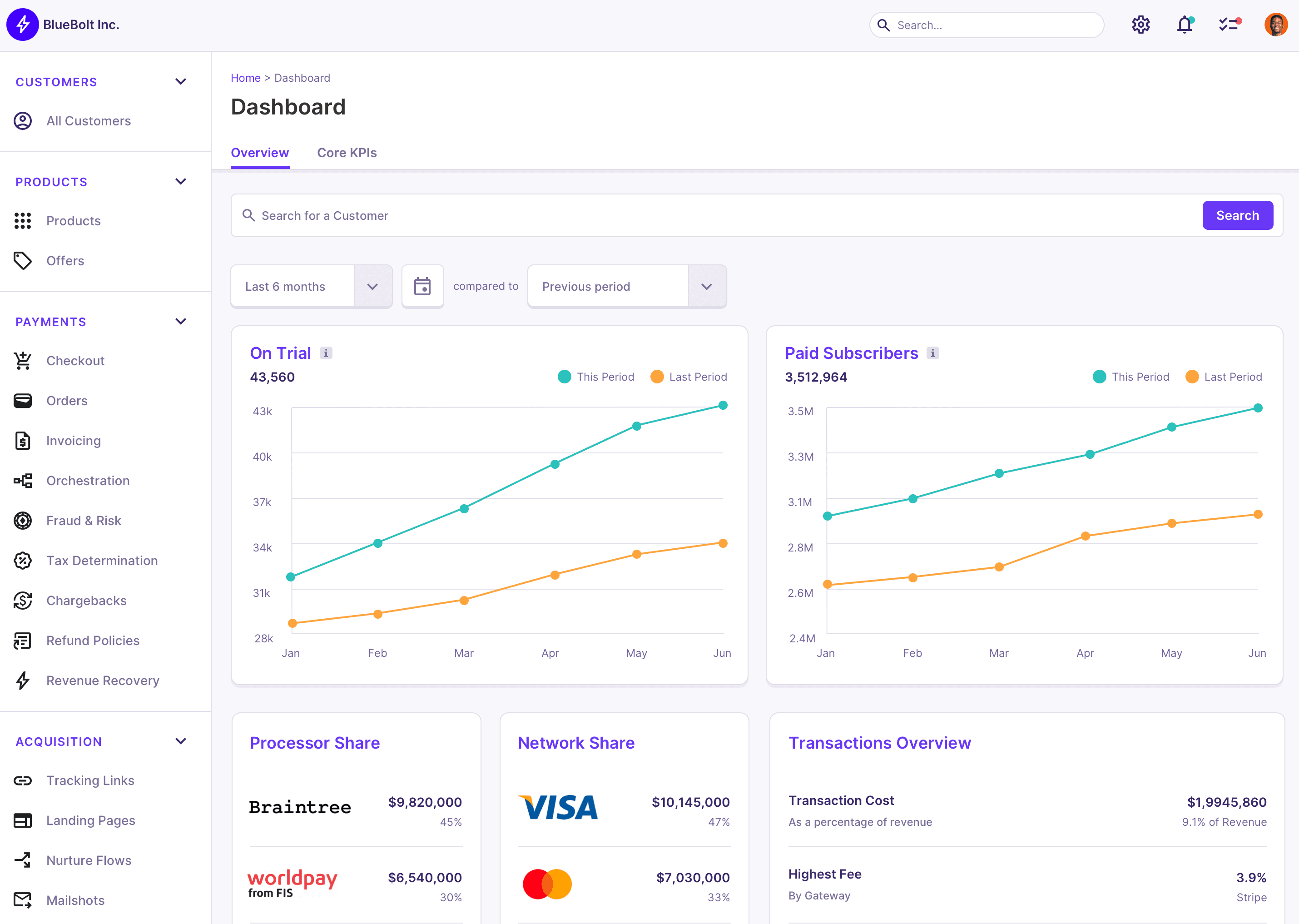
Chargehive helps you

Chargehive helps you

Operate multiple SaaS brands from one core.

Operate multiple SaaS brands from one core.

Managing multiple SaaS brands often means duplicated tools, fragmented data, inconsistent billing rules, and rising operational overhead.

Each brand adds complexity that slows teams and increases risk.

Managing multiple SaaS brands often means duplicated tools, fragmented data, inconsistent billing rules, and rising operational overhead.

Each brand adds complexity that slows teams and increases risk.

Solution

Chargehive provides a single operational infrastructure that supports multiple brands, regions, and products.

Shared logic and data reduce duplication, while brand-level controls preserve flexibility.

Teams gain consistent operations without sacrificing brand independence or introducing architectural sprawl.

Outcomes

Outcomes

The core benefits of running multiple brands within Chargehive:

The core benefits of running multiple brands within Chargehive:

Single operational control layer

Run multiple brands, products, and regions through one governed system while preserving brand-level independence.

Consistent financial governance

Apply unified billing, payment, and risk policies across brands to ensure accuracy, compliance, and predictability.

Reduced duplication of tooling

Avoid running separate stacks per brand, lowering licensing, integration, and operational overhead.

Faster brand launches

Launch new brands or offerings without rebuilding billing, payments, or support infrastructure from scratch.

Clear cross-brand visibility

Compare performance, risk, and revenue drivers across brands using consistent, reliable operational data.

Scalable organisational structure

Support portfolio growth without multiplying operational complexity or headcount.

Frequently Asked Questions

What kind of companies is Chargehive built for?

Chargehive is designed for SaaS businesses that have outgrown traditional CRMs or billing tools. If you’re managing millions of customers, multiple brands, or complex payment flows, Chargehive helps unify your operations.

Is Chargehive suitable for smaller SaaS companies?

Yes, but it’s primarily designed for SaaS businesses with more than 50,000 active customers or high transaction volume. Early-stage companies can still benefit if they expect to scale quickly.

How does Chargehive handle compliance and data security?

Chargehive handles compliance and data security through an independently assessed PCI DSS Level 1 Service Provider program, alignment with SOC 2 controls, strong segregation of PCI-scoped systems, encryption, secure transport, and ongoing vulnerability management, monitoring, and incident response. In addition, for personal data we align to applicable legal requirements such as UK GDPR / Data Protection Act 2018, the EU GDPR, and relevant US privacy and breach-notification laws (state-based, where applicable), with policies and controls to support access control, data minimisation/retention, and timely incident handling.

Where can I see Chargehive in action?

You can request a live demo or case study showing how Chargehive processes millions of customer events and payments every day for global SaaS brands.

What kind of companies is Chargehive built for?

Chargehive is designed for SaaS businesses that have outgrown traditional CRMs or billing tools. If you’re managing millions of customers, multiple brands, or complex payment flows, Chargehive helps unify your operations.

Is Chargehive suitable for smaller SaaS companies?

Yes, but it’s primarily designed for SaaS businesses with more than 50,000 active customers or high transaction volume. Early-stage companies can still benefit if they expect to scale quickly.

How does Chargehive handle compliance and data security?

Chargehive handles compliance and data security through an independently assessed PCI DSS Level 1 Service Provider program, alignment with SOC 2 controls, strong segregation of PCI-scoped systems, encryption, secure transport, and ongoing vulnerability management, monitoring, and incident response. In addition, for personal data we align to applicable legal requirements such as UK GDPR / Data Protection Act 2018, the EU GDPR, and relevant US privacy and breach-notification laws (state-based, where applicable), with policies and controls to support access control, data minimisation/retention, and timely incident handling.

Where can I see Chargehive in action?

You can request a live demo or case study showing how Chargehive processes millions of customer events and payments every day for global SaaS brands.

What kind of companies is Chargehive built for?

Chargehive is designed for SaaS businesses that have outgrown traditional CRMs or billing tools. If you’re managing millions of customers, multiple brands, or complex payment flows, Chargehive helps unify your operations.

Is Chargehive suitable for smaller SaaS companies?

Yes, but it’s primarily designed for SaaS businesses with more than 50,000 active customers or high transaction volume. Early-stage companies can still benefit if they expect to scale quickly.

How does Chargehive handle compliance and data security?

Chargehive handles compliance and data security through an independently assessed PCI DSS Level 1 Service Provider program, alignment with SOC 2 controls, strong segregation of PCI-scoped systems, encryption, secure transport, and ongoing vulnerability management, monitoring, and incident response. In addition, for personal data we align to applicable legal requirements such as UK GDPR / Data Protection Act 2018, the EU GDPR, and relevant US privacy and breach-notification laws (state-based, where applicable), with policies and controls to support access control, data minimisation/retention, and timely incident handling.

Where can I see Chargehive in action?

You can request a live demo or case study showing how Chargehive processes millions of customer events and payments every day for global SaaS brands.

It's Time

Built for the scale and operational reality your CRM can’t handle.

In a short strategy session, we’ll show you how market leaders structure their operations — and where most growing teams get stuck.

©Chargehive 2026