


Google Pay for SaaS

Google Pay for SaaS

Google Pay for Enterprise SaaS

Google Pay for Enterprise SaaS

Chargehive is a certified Google Pay provider for enterprise SaaS — integrating Google Pay acceptance into a full payment orchestration layer, not just as a standalone toggle.

6M+ customers served.

7M+ transactions per month.

Chargehive is a certified Google Pay provider for enterprise SaaS — integrating Google Pay acceptance into a full payment orchestration layer, not just as a standalone toggle.

6M+ customers served.

7M+ transactions per month.

Intelligent routing

Intelligent routing

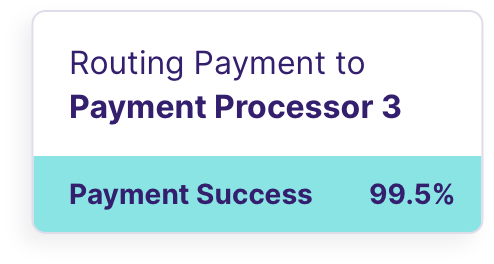
Google Pay transactions are routed to the processor most likely to produce the highest acceptance rate for the card type and geography behind the wallet — not defaulted to a single processor.

For SaaS businesses processing at volume, the difference between optimised routing and default routing is a measurable improvement in authorisation rate.

Google Pay transactions are routed to the processor most likely to produce the highest acceptance rate for the card type and geography behind the wallet — not defaulted to a single processor.

For SaaS businesses processing at volume, the difference between optimised routing and default routing is a measurable improvement in authorisation rate.

Decline code-aware retry logic

Decline code-aware retry logic

When a Google Pay transaction declines, the retry strategy is governed by the decline reason — not a fixed schedule. Soft declines are retried at the optimal interval for that failure type.

Hard declines are routed immediately to customer communications. The same intelligence applied to card transactions applies to Google Pay.

When a Google Pay transaction declines, the retry strategy is governed by the decline reason — not a fixed schedule. Soft declines are retried at the optimal interval for that failure type.

Hard declines are routed immediately to customer communications. The same intelligence applied to card transactions applies to Google Pay.

Fraud screening at the wallet level

Fraud screening at the wallet level

Google Pay's tokenisation removes raw card data from the transaction, which reduces one fraud vector.

Chargehive adds a fraud scoring layer above the wallet — velocity checks, device signals, and behavioural patterns — that applies to Google Pay transactions alongside all other payment methods.

Google Pay's tokenisation removes raw card data from the transaction, which reduces one fraud vector.

Chargehive adds a fraud scoring layer above the wallet — velocity checks, device signals, and behavioural patterns — that applies to Google Pay transactions alongside all other payment methods.

Unified reporting across methods

Unified reporting across methods

Google Pay acceptance rates, failure rates, recovery rates, and revenue contribution are visible in the same reporting layer as every other payment method.

Not in a separate Google Pay dashboard. In the unified payment reporting that covers your entire transaction volume.

Google Pay acceptance rates, failure rates, recovery rates, and revenue contribution are visible in the same reporting layer as every other payment method.

Not in a separate Google Pay dashboard. In the unified payment reporting that covers your entire transaction volume.

The problem with Google Pay as a point integration:

The problem with Google Pay as a point integration:

Google Pay acceptance is table stakes. What happens after the tap is what matters.

Most SaaS businesses add Google Pay as a payment method and consider the job done. The button appears at checkout. Customers with Android devices and saved cards use it. Acceptance rates improve marginally.

What does not improve is everything that happens downstream of the initial authorisation.

A Google Pay transaction that fails on retry goes through the same blunt retry logic as every other failed payment. A Google Pay authorisation that succeeds but encounters a billing error produces the same downstream support query. A Google Pay transaction routed to a processor that has a poor acceptance rate for the card type behind the wallet produces a worse outcome than it should.

Google Pay is just the payment method.

Chargehive is the operational layer that determines what happens to every payment — including Google Pay transactions — from authorisation through to recovery, reconciliation, and reporting.

Google Pay acceptance is table stakes. What happens after the tap is what matters.

Most SaaS businesses add Google Pay as a payment method and consider the job done. The button appears at checkout. Customers with Android devices and saved cards use it. Acceptance rates improve marginally.

What does not improve is everything that happens downstream of the initial authorisation.

A Google Pay transaction that fails on retry goes through the same blunt retry logic as every other failed payment. A Google Pay authorisation that succeeds but encounters a billing error produces the same downstream support query. A Google Pay transaction routed to a processor that has a poor acceptance rate for the card type behind the wallet produces a worse outcome than it should.

Google Pay is just the payment method.

Chargehive is the operational layer that determines what happens to every payment — including Google Pay transactions — from authorisation through to recovery, reconciliation, and reporting.

Google Pay for subscription SaaS is not the same as Google Pay for e-commerce

Google Pay for subscription SaaS is not the same as Google Pay for e-commerce

E-commerce Google Pay integrations are primarily about checkout conversion — getting a customer through a one-time purchase with minimum friction. That is a solved problem.

For subscription SaaS, the challenge is different. The first Google Pay authorisation is the beginning of a billing relationship, not the end of a transaction. The card behind the wallet will be retried on renewal.

It will be subject to the same card data decay that affects stored card details. It will produce the same failure modes — insufficient funds, card velocity limits, temporary issuer holds — that all payment methods produce at scale.

Chargehive's payment orchestration handles the full lifecycle of a Google Pay payment relationship: initial authorisation, recurring billing, retry and recovery logic, card updater services for the underlying card, dunning communications, and chargeback management. The Google Pay button is the customer's entry point. Chargehive governs everything from that point forward.

E-commerce Google Pay integrations are primarily about checkout conversion — getting a customer through a one-time purchase with minimum friction. That is a solved problem.

For subscription SaaS, the challenge is different. The first Google Pay authorisation is the beginning of a billing relationship, not the end of a transaction. The card behind the wallet will be retried on renewal.

It will be subject to the same card data decay that affects stored card details. It will produce the same failure modes — insufficient funds, card velocity limits, temporary issuer holds — that all payment methods produce at scale.

Chargehive's payment orchestration handles the full lifecycle of a Google Pay payment relationship: initial authorisation, recurring billing, retry and recovery logic, card updater services for the underlying card, dunning communications, and chargeback management. The Google Pay button is the customer's entry point. Chargehive governs everything from that point forward.

Built inside a SaaS business processing millions of transactions per month

Built inside a SaaS business processing millions of transactions per month

Chargehive was not built for the market and then tested in production. It was built inside a SaaS business operating at scale — serving over 6 million customers, processing 7 million+ transactions per month — and refined under real operational load before being made available to other businesses.

Google Pay acceptance is one element of a payment stack that has been running at that volume, daily, across multiple processors, geographies, and payment methods. The orchestration layer that governs Google Pay transactions at Chargehive is the same layer that governs every other payment method — proven under the kind of operational pressure that exposes the gaps in point integrations.

• 6M+ customers served

• 7M+ transactions per month

• 500M+ customer records

• PCI DSS Level 1 Service Provider

Chargehive was not built for the market and then tested in production. It was built inside a SaaS business operating at scale — serving over 6 million customers, processing 7 million+ transactions per month — and refined under real operational load before being made available to other businesses.

Google Pay acceptance is one element of a payment stack that has been running at that volume, daily, across multiple processors, geographies, and payment methods. The orchestration layer that governs Google Pay transactions at Chargehive is the same layer that governs every other payment method — proven under the kind of operational pressure that exposes the gaps in point integrations.

• 6M+ customers served

• 7M+ transactions per month

• 500M+ customer records

• PCI DSS Level 1 Service Provider

Testimonial

From Startup to Market Leader.

Chargehive is the engine that powered our transition from startup to market leader.

The level of control Chargehive gives us is incredible. It touches every aspect of our operations, from customer acquisition to data analytics.

We use Chargehive for all communication with our customers, marketing emails, renewal notices and customer support (through emails, live chat & phone).

Most importantly, it allowed us to evolve our payments stack, drastically reducing payment failures and maximising success rates across multiple processors.

We simply couldn't have scaled this efficiently without it.

Dean Stevens

Head of Payments Compliance

Testimonial

From Startup to Market Leader.

Chargehive is the engine that powered our transition from startup to market leader.

The level of control Chargehive gives us is incredible. It touches every aspect of our operations, from customer acquisition to data analytics.

We use Chargehive for all communication with our customers, marketing emails, renewal notices and customer support (through emails, live chat & phone).

Most importantly, it allowed us to evolve our payments stack, drastically reducing payment failures and maximising success rates across multiple processors.

We simply couldn't have scaled this efficiently without it.

Dean Stevens

Head of Payments Compliance

Testimonial

From Startup to Market Leader.

Chargehive is the engine that powered our transition from startup to market leader.

The level of control Chargehive gives us is incredible. It touches every aspect of our operations, from customer acquisition to data analytics.

We use Chargehive for all communication with our customers, marketing emails, renewal notices and customer support (through emails, live chat & phone).

Most importantly, it allowed us to evolve our payments stack, drastically reducing payment failures and maximising success rates across multiple processors.

We simply couldn't have scaled this efficiently without it.

Dean Stevens

Head of Payments Compliance

Frequently Asked Questions

Does Chargehive support Google Pay for recurring subscription billing — not just one-time payments?

Yes — and this is the distinction that matters for SaaS. Most Google Pay integrations are built for one-time e-commerce transactions. Chargehive supports Google Pay across the full subscription lifecycle: initial authorisation, recurring renewal billing, mid-cycle upgrades and downgrades, and retry and recovery sequences when a renewal fails. The card stored behind the Google Pay wallet is treated as a long-term billing relationship, not a single transaction — which means it benefits from the same retry logic, card updater services, and dunning sequences that govern every other payment method in your stack.

How does Google Pay fit into Chargehive's multi-processor routing?

Google Pay transactions are routed through Chargehive's payment orchestration layer in the same way as any other payment method. When a customer pays via Google Pay, Chargehive routes the underlying transaction to the processor with the highest historical acceptance rate for that card type and geography — not to a default processor. If the primary processor declines, the fallback routing logic applies to the Google Pay transaction exactly as it would to a card payment. For SaaS businesses processing Google Pay transactions at volume, this means wallet payments participate fully in the routing and fallback intelligence rather than sitting outside it.

Is Google Pay accepted as a payment method across all of Chargehive's supported geographies?

Google Pay availability varies by market, card network, and issuing bank — and Chargehive's payment orchestration layer reflects that variability in real time. Where Google Pay is supported, Chargehive presents it as a payment option and routes it through the appropriate processor for that geography. Where it is not supported or not available for a specific card, Chargehive's payment method logic falls back to the next available option without interrupting the customer flow. For SaaS businesses operating across multiple geographies, this means Google Pay acceptance is managed as part of a coherent multi-market payment strategy rather than as a market-by-market configuration exercise.

What does Google Pay implementation look like within a Chargehive integration?

Google Pay is available as a payment method within Chargehive's payment infrastructure without requiring a separate Google Pay integration. Businesses that implement Chargehive as their payment orchestration layer get Google Pay acceptance as part of that implementation — alongside other supported payment methods — rather than building and maintaining a standalone Google Pay connection. For technical teams evaluating the implementation scope, the specifics depend on your existing payment architecture. Our team can walk through exactly what the integration looks like for your setup in a short technical conversation.

Does Chargehive support Google Pay for recurring subscription billing — not just one-time payments?

Yes — and this is the distinction that matters for SaaS. Most Google Pay integrations are built for one-time e-commerce transactions. Chargehive supports Google Pay across the full subscription lifecycle: initial authorisation, recurring renewal billing, mid-cycle upgrades and downgrades, and retry and recovery sequences when a renewal fails. The card stored behind the Google Pay wallet is treated as a long-term billing relationship, not a single transaction — which means it benefits from the same retry logic, card updater services, and dunning sequences that govern every other payment method in your stack.

How does Google Pay fit into Chargehive's multi-processor routing?

Google Pay transactions are routed through Chargehive's payment orchestration layer in the same way as any other payment method. When a customer pays via Google Pay, Chargehive routes the underlying transaction to the processor with the highest historical acceptance rate for that card type and geography — not to a default processor. If the primary processor declines, the fallback routing logic applies to the Google Pay transaction exactly as it would to a card payment. For SaaS businesses processing Google Pay transactions at volume, this means wallet payments participate fully in the routing and fallback intelligence rather than sitting outside it.

Is Google Pay accepted as a payment method across all of Chargehive's supported geographies?

Google Pay availability varies by market, card network, and issuing bank — and Chargehive's payment orchestration layer reflects that variability in real time. Where Google Pay is supported, Chargehive presents it as a payment option and routes it through the appropriate processor for that geography. Where it is not supported or not available for a specific card, Chargehive's payment method logic falls back to the next available option without interrupting the customer flow. For SaaS businesses operating across multiple geographies, this means Google Pay acceptance is managed as part of a coherent multi-market payment strategy rather than as a market-by-market configuration exercise.

What does Google Pay implementation look like within a Chargehive integration?

Google Pay is available as a payment method within Chargehive's payment infrastructure without requiring a separate Google Pay integration. Businesses that implement Chargehive as their payment orchestration layer get Google Pay acceptance as part of that implementation — alongside other supported payment methods — rather than building and maintaining a standalone Google Pay connection. For technical teams evaluating the implementation scope, the specifics depend on your existing payment architecture. Our team can walk through exactly what the integration looks like for your setup in a short technical conversation.

Does Chargehive support Google Pay for recurring subscription billing — not just one-time payments?

Yes — and this is the distinction that matters for SaaS. Most Google Pay integrations are built for one-time e-commerce transactions. Chargehive supports Google Pay across the full subscription lifecycle: initial authorisation, recurring renewal billing, mid-cycle upgrades and downgrades, and retry and recovery sequences when a renewal fails. The card stored behind the Google Pay wallet is treated as a long-term billing relationship, not a single transaction — which means it benefits from the same retry logic, card updater services, and dunning sequences that govern every other payment method in your stack.

How does Google Pay fit into Chargehive's multi-processor routing?

Google Pay transactions are routed through Chargehive's payment orchestration layer in the same way as any other payment method. When a customer pays via Google Pay, Chargehive routes the underlying transaction to the processor with the highest historical acceptance rate for that card type and geography — not to a default processor. If the primary processor declines, the fallback routing logic applies to the Google Pay transaction exactly as it would to a card payment. For SaaS businesses processing Google Pay transactions at volume, this means wallet payments participate fully in the routing and fallback intelligence rather than sitting outside it.

Is Google Pay accepted as a payment method across all of Chargehive's supported geographies?

Google Pay availability varies by market, card network, and issuing bank — and Chargehive's payment orchestration layer reflects that variability in real time. Where Google Pay is supported, Chargehive presents it as a payment option and routes it through the appropriate processor for that geography. Where it is not supported or not available for a specific card, Chargehive's payment method logic falls back to the next available option without interrupting the customer flow. For SaaS businesses operating across multiple geographies, this means Google Pay acceptance is managed as part of a coherent multi-market payment strategy rather than as a market-by-market configuration exercise.

What does Google Pay implementation look like within a Chargehive integration?

Google Pay is available as a payment method within Chargehive's payment infrastructure without requiring a separate Google Pay integration. Businesses that implement Chargehive as their payment orchestration layer get Google Pay acceptance as part of that implementation — alongside other supported payment methods — rather than building and maintaining a standalone Google Pay connection. For technical teams evaluating the implementation scope, the specifics depend on your existing payment architecture. Our team can walk through exactly what the integration looks like for your setup in a short technical conversation.

It's Time

Ready to see how Google Pay fits into a full payment orchestration layer?

In a short conversation, we can show you how Chargehive handles Google Pay acceptance alongside your existing payment methods — routing, retry logic, fraud screening, and reporting included.

©Chargehive 2026